





 Cart (9)
Is Self-Monitoring Enough to Keep Your Home Secure?
November 27, 2026
Is Self-Monitoring Enough to Keep Your Home Secure?
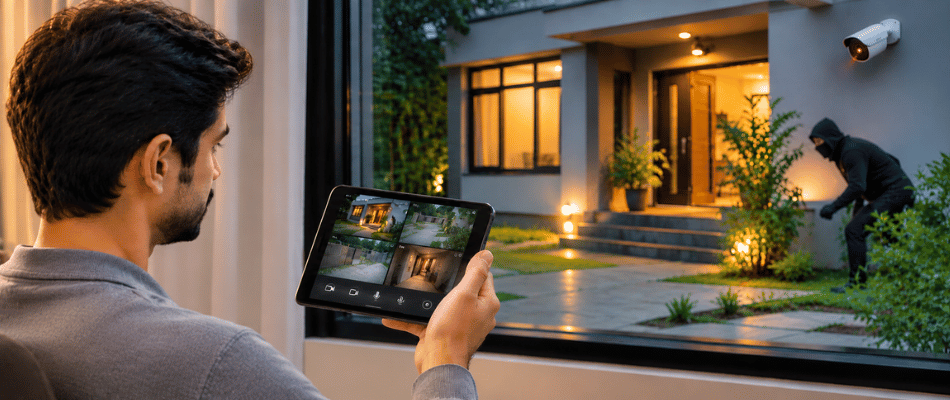
Most homeowners want to know what is happening at their home, even when they are away. This is one reason why CCTV cameras, smart alarms & mobile security apps have become popular. They allow people to receive alerts, check camera footage & keep an eye on their property through their phones.
But what happens when you are busy at work, travelling, or sleeping & a security alert suddenly appears on your phone? Will you be able to check it immediately? And what if someone has already entered your home? These are important questions to consider when choosing between self-monitoring & professional home security monitoring.
What Is Self-Monitoring in Home Security?
Self-monitoring means that you monitor the security of your home on your own. The alert from your camera or alarm will be sent to your mobile phone when there is any suspicious activity.
You can log into the application, view the footage of the camera, and then take further steps. In addition, some alarm systems allow you to get an alert in case of motion or entering a restricted zone. It is quite convenient to monitor your property from anywhere but, at the same time, you should be responsible for receiving every critical alert or reacting to them.
Why Can Self-Monitoring Become a Problem?
Self-monitoring is effective if you are available to monitor your phone. However, in real life, things may not be that predictable.
Here are some instances in which solely relying on mobile notifications might not be sufficient.
1. You Might Miss an Alert
Imagine you are in an important meeting, driving, or sleeping. At this moment, your home security camera senses motion and notifies you about it.
If your phone is set to silent mode or you do not check it right away, you will miss the notification. By the time you receive the alert, the situation at home will have already changed.
2. CCTV Cameras Can Be Damaged or Hidden
Just because there are CCTV cameras fitted, it doesn’t mean that there is no other risk. As an example from November 2026 in Kolkata, the burglars are reported to have hidden the lens of the CCTV camera with the leftover birthday cake before breaking into an empty home. In a separate incident in Bhopal, the burglar has reportedly removed the CCTV recorder and hard drive from a locked home.
These are some example of how owners should not rely solely on camera footage.
3. You May Not Always Be Able To Act Instantly
Getting the alert is one thing, but knowing how to act afterward is a different matter. For instance, if you happen to be away in another city and get an intrusion alert, there’s no way you would make it back home within just a few minutes.
An incident that occurred in Mohali in November 2026 serves as a good example of this risk factor as well. The homeowner got an alert from CCTV cameras and informed the neighbour of the situation, who subsequently got injured after being shot at when trying to scare away the burglars. This is a good thing to remember that both homeowners and neighbours should never have to confront potential burglars.
4. False Alarms Might Become Hard to Control
All alarms do not indicate that someone tries to break into your house. False alarms might result due to pets or unintentional movement, etc.
If you are controlling all these by yourself, you will have to look at all those notifications and then figure out if you need to pay any attention to them or not.
What is Professional Alarm Monitoring?
Professional alarm monitoring provides an extra layer of security for your property. Instead of relying only on your mobile phone, the alerts from your set up security sensors are forwarded to a professional monitoring center. The professionals at the monitoring center will receive these alerts and follow the defined response protocol.
Based on the agreement that is made, this may include contacting you or your designated contacts and following the escalation protocol. This means that you don’t need to handle all the incoming alarms yourself.
Self-Monitoring vs Professional Monitoring
Both methods ensure that you know what is going on around your property, but there is one crucial point to consider.
| Self-Monitoring | Professional Monitoring |
|---|---|
| Notifications come to your phone directly | Signals from alarms are sent to the monitoring station |
| You deal with notifications yourself | The signals are managed by specialists |
| You make your decisions about further actions | The monitoring team follows an agreed procedure |
| Depends on your availability | Provides additional monitoring support |
| You manage alerts and follow-ups | Monitoring is handled by a professional team |
The choice will depend on your house, your daily schedule, and your security needs. You may want to use both mobile access and professional monitoring.
How Does a Monitored Home Security System Work?
A professionally monitored Security Alarm System generally works through 4 steps.
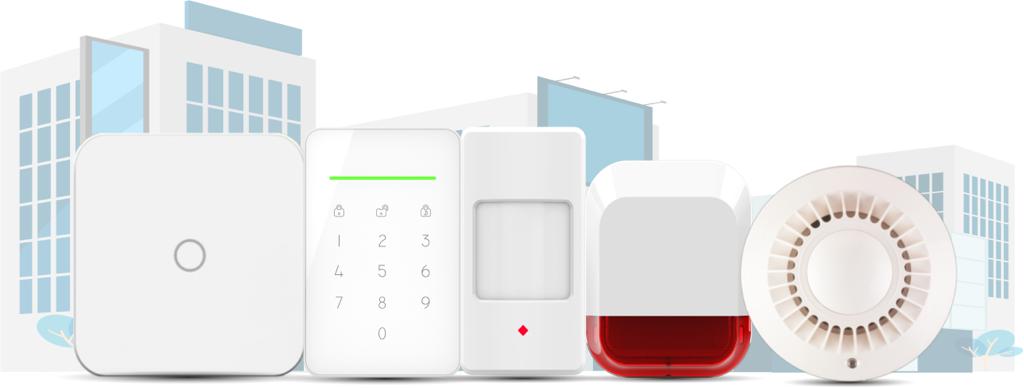
● Detection: The door sensors, window sensors, and motion sensors sense events in protected locations.
● Alarm Activation: In the case of a sensed event from a configured device, the alarm is triggered.
● Signal Transmission: The alarm system transmits a signal via a communication link.
● Professional Monitoring: The monitoring team gets the signal and acts accordingly.
This process helps ensure that security alerts are not dependent only on you checking your phone.
Why Should You Consider Professional Monitoring for Your Home?
You might find that your house is left empty for hours every day. You could be away at work, out with your family on travel, or in another city altogether. In such situations, you will need some additional monitoring. A professionally monitored security system is a combination of intrusion detection, alarms, and professional monitoring that helps protect homeowners.
DFS Services provides residential security solutions for protecting homes. Their systems have options for door and window sensors, motion sensors, and other security systems based on the needs of your property.
DFS Security Grid also comes equipped with M2M SIM-based connectivity that ensures alarm communication even when home Wi-Fi is not available. The connectivity will depend on whether there is any cellular network coverage in the area. Professional monitoring helps homeowners deal with security threats in addition to what they already do.
Conclusion
Self-monitoring can be a great way to keep up-to-date with what’s happening at home, yet there is also some responsibility involved. You have to detect alarms, see what is going on, and make a decision about how to act.
Recent cases prove that even having CCTV cameras or mobile alarms does not necessarily mean that you will be able to respond to any situation related to your security.
Alarm monitoring becomes an additional tool for getting security alarms and following a certain procedure.