





 Cart (9)
What Happens After a Business Security Alarm Is Triggered?
October 22, 2026
What Happens After a Business Security Alarm Is Triggered?
Imagine your business is closed at night. Or your employees have left for home. And then suddenly, movement and intruders come onto your premises or are detected by a motion sensor. The alarm activates, but what happens next? Would your alarm system sound, and how would you know?
This is where a 24 x 7 monitored alarm security system may help. Instead of completely relying on someone hearing a siren or checking their phone, a professionally monitored 24×7 alarm system connects the alarm event to a professional monitoring team that can initiate the appropriate response.
1. It Starts With an Alarm Sensor
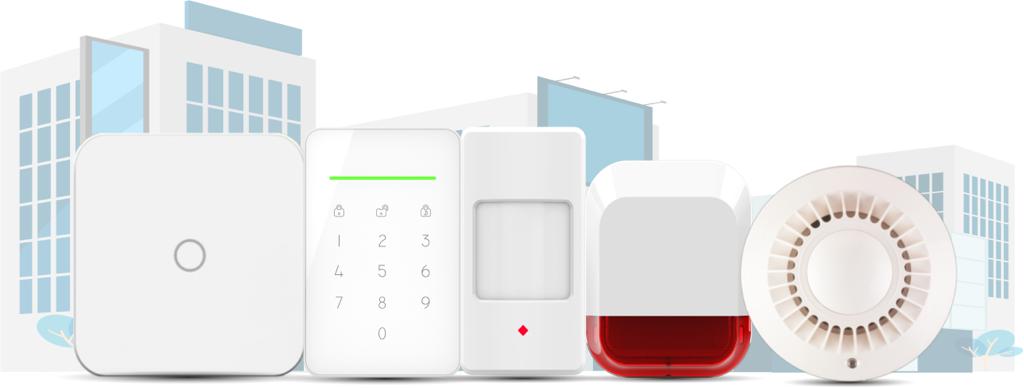
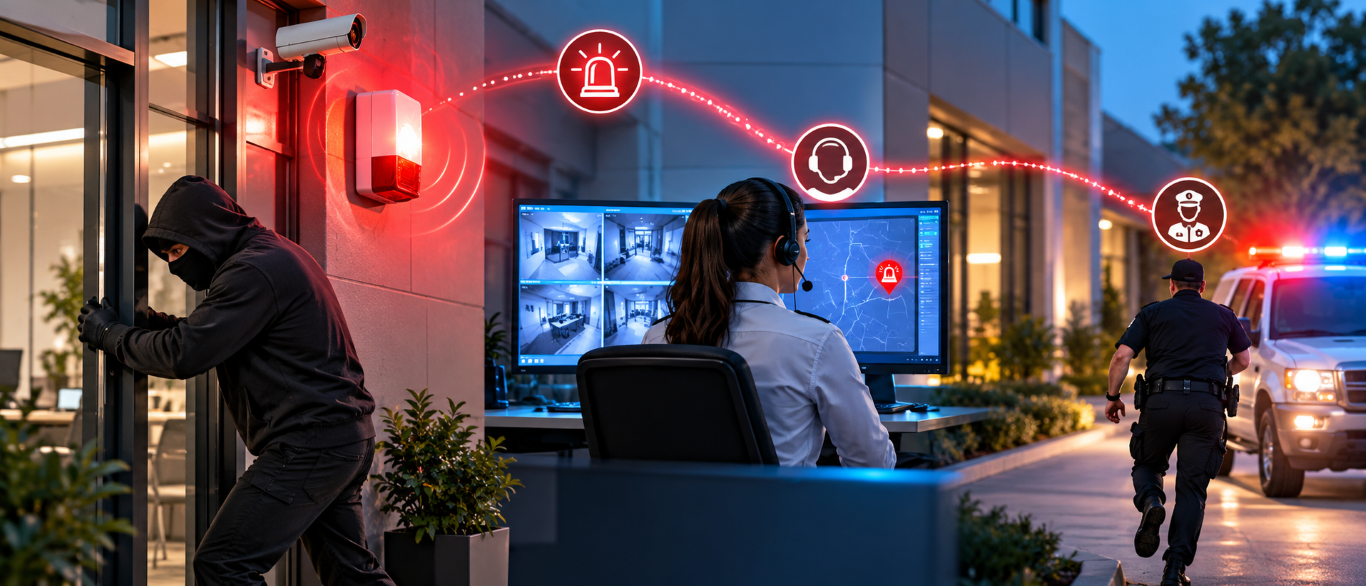
Every 24 x 7 monitored alarm system begins with detection. Depending on the business requirements, sensors may be installed on doors, windows, shutters & other entry points. These motion detectors sense movement in protected zones, while there are dedicated sensors for smoke, heat, or any danger.
When a sensor detects an event, it sends a signal to the system’s control hub. The system then processes the event according to its configuration.
For example, an unauthorised door opening during off hours may trigger an intrusion alarm. A smoke detector, on the other hand, may generate a fire risk alert. The response depends on the type of signal that is received.
2. The Control Hub Sends the Signal to the Monitoring Centre
When an alarm is triggered, the control hub sends the event to the Central Monitoring Station (CMS). This communication is an important part of the process because detecting a threat is only useful if the information reaches the right people who are responsible for handling it.
The reliability of this connection matters. Power supply issues, communication failures & technical equipment faults can affect security if they go unnoticed. Depending on the system, backup power & alternative communication channels can help maintain connectivity.
That is why many businesses consider CMS and monitoring arrangements when selecting a commercial security system. The monitoring arrangement and the reliability of the communication path deserve equal attention.
3. Monitoring Professionals Receive the Alert
When the signal reaches the monitoring centre, the team receives information about the trigger and can follow the established response procedure.
The next steps depend on the type of alarm, the system’s configuration & the agreed monitoring protocol. The central monitoring station team may contact the right person via SMS, email & app notifications, assess available information and escalate the incident when necessary.
This is especially useful outside working hours. A business owner may be travelling, asleep, or unable to answer a phone. Professional monitoring provides an additional layer of security rather than making security dependent on a single person’s availability.
4. The Appropriate Response Is Initiated
An alarm notification alone does not resolve an incident. Someone needs to determine what action should follow.Depending on the threat and agreed procedures, this may involve contacting the authorized person or business owner & in case of no one to contact, then contacting the nearest police station,
Business owners should understand these procedures before installation. Ask who will be contacted first, what happens if nobody answers & how different events such as intrusion, burglary, and fire are handled.A clear escalation plan helps everyone understand their responsibilities when an alert occurs.
5. Alarm Monitoring Also Helps Identify System Issues
24×7 Alarm monitoring is not limited to responding to break-ins. Depending on the devices and service, the system may also report technical issues such as low batteries, tampering or communication problems.
These alerts matter because a security system must remain operational to do its job. A sensor with a depleted battery or a disconnected communication link could create a gap in protection if the issue is not addressed.
Regular maintenance, timely testing & prompt attention to system warnings help businesses keep their security arrangements dependable.
Why Do Businesses Need Alarm Monitoring Services?
For offices, businesses, shops, warehouses and other commercial spaces, security risks do not disappear when the working day ends. A 24 x 7 monitored alarm system connects detection with a right response process, helping businesses manage incidents like burglary or fire even when their premises are closed.
However, monitoring is not a guarantee that every incident will be prevented. Its effectiveness depends on suitable equipment, reliable communication, correct configuration and appropriate response procedures.
DFS Services offers 24 X 7 monitored alarm services, and can help select the equipment that would be best suited for a particular business needs.
If you want to understand how this can work for your premises, explore our Business Security Alarm Monitoring System to learn more about the available solutions.